
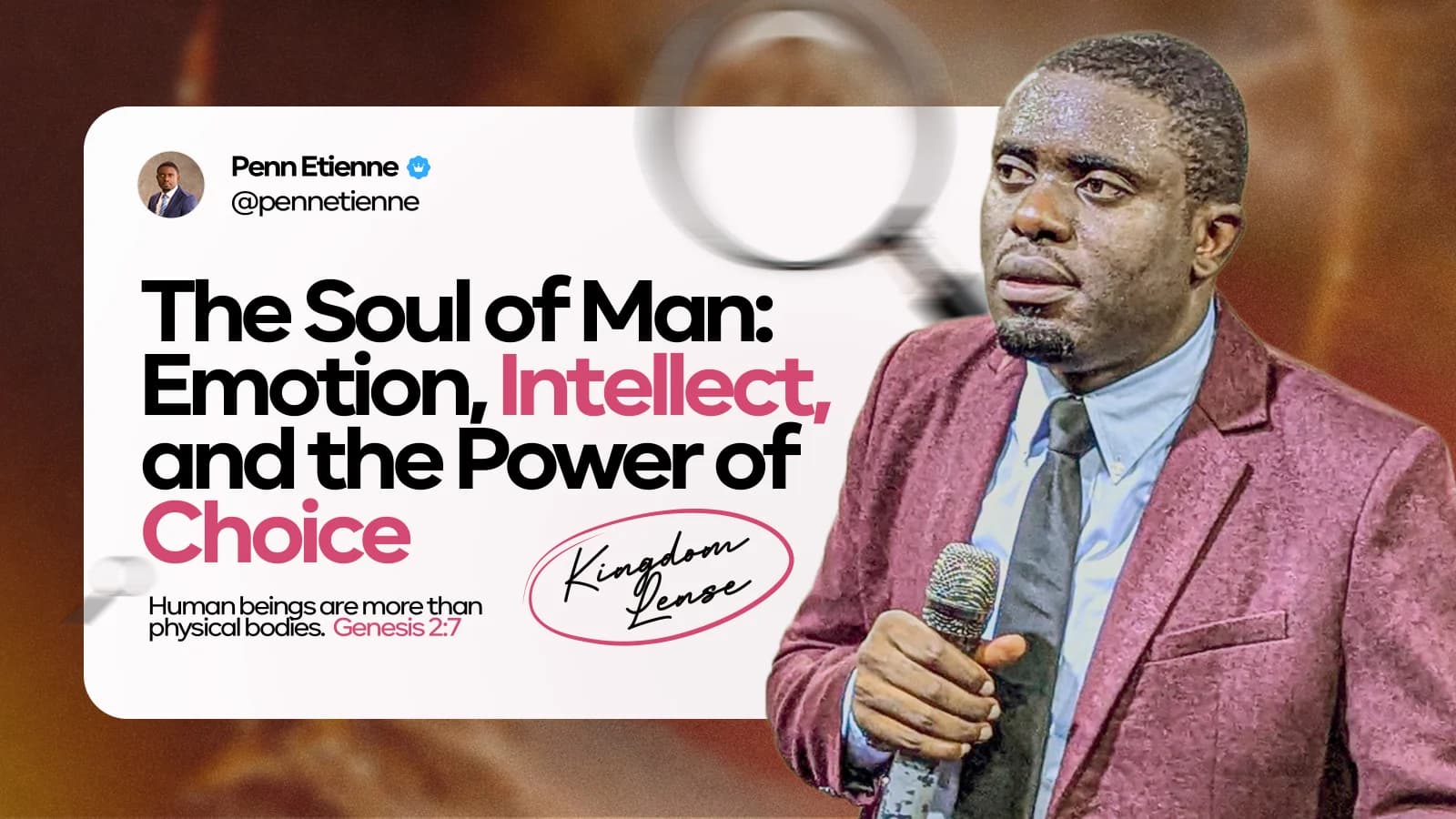
The Soul of Man: Emotion, Intellect, and the Power of Choice
The soul—comprising intellect, emotions, and will—is the control center of human conduct. Discover why the soul requires biblical education rather than activation, and how daily choices align our lives with God’s purpose and grace.
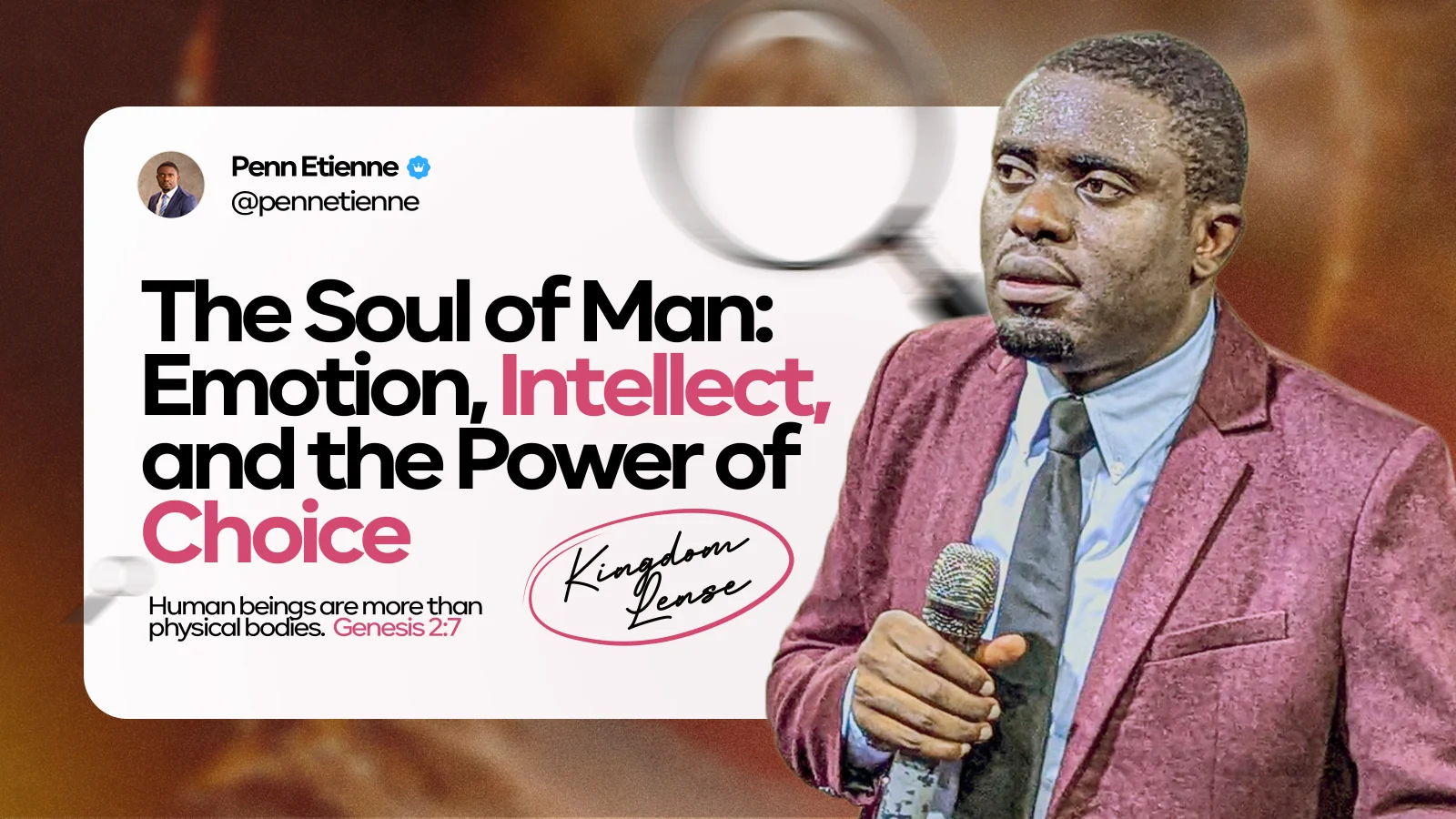
The Soul of Man: Emotion, Intellect, and the Power of Choice
Human beings are more than physical bodies. In Genesis 2:7, Scripture reveals that God formed man from the dust of the ground, breathed into him the breath of life, and man became a living soul. This gives us an essential picture of the triune nature of man—spirit, soul, and body and highlights the critical significance of the soul.
The soul occupies a central, mediating place in the life of man. It is the seat of man’s emotions, intellect, and will:
- Emotions: How we feel, react, and emotionally respond to life.
- Intellect: How we reason, comprehend, study, and understand truth.
- Will: How we make decisions, resolve intentions, and execute choices.
Together, these three faculties govern human expression and determine how we live out our lives on earth.
The Education of the Soul
A vital truth to understand is that the soul does not require activation. It requires education.
The soul is constantly operational, but it must be trained, renewed, and aligned with spiritual reality. What happens in the spirit and what happens in the flesh are vastly different. When the intellect is renewed by the Word of God and emotions are brought under subjection to the Spirit, the will is empowered to make choices that agree with God's purpose.
Spiritual growth requires intentional discipline. It is not enough to simply desire spiritual results; our minds must be instructed, and our faculties trained.
The Soul and the Power of Choice
While all three faculties are vital, the exercise of the will is where our direction is determined.
Every day, we make decisions. Some appear minor, but consistent choices compound over time to shape character and determine destiny. The soul's will dictates whether we walk in the Spirit or yield to the flesh.
Scripture places this responsibility squarely on our will:
- In Deuteronomy 30:19, Moses placed life and death, blessing and cursing before the people, calling them to choose life.
- In Joshua 24:15, Joshua presented a decisive demand to the will: “Choose for yourselves this day whom you will serve.”
Our relationship with God is never passive; it demands the active engagement of our will.
What Are You Sowing?
The battle between the flesh and the spirit is fought directly in the decisions of the soul.
In Galatians 6:7–8, the Apostle Paul establishes an unchanging spiritual law:
"Do not be deceived: God can not be mocked. A man reaps what he sows. Whoever sows to please their flesh, from the flesh will reap destruction; whoever sows to please the Spirit, from the Spirit will reap eternal life."
What are you feeding your mind? What thoughts are you entertaining in your intellect? What appetites are guiding your emotions? What choices are you executing with your will?
If a person continually sows to the flesh through uncontrolled desires and carnal choices, they can not harvest spiritual life. The harvest we reap is entirely dependent on the seeds we plant through our daily decisions.
Destiny Cannot Be Fulfilled Carnally
The fulfillment of divine purpose can not be achieved through natural talent, ambition, or fleshly drive alone. A person may possess abundant skill and opportunity, but without spiritual alignment, destiny remains unfulfilled.
This is why the state and education of your soul matter. If your intellect and emotions remain governed by carnal patterns, the will naturally defaults to the flesh. But when the soul is systematically educated by truth, your choices naturally align with the life God has prepared for you.
Grace and the Will to Labor
Understanding the soul's will also clarifies the relationship between grace and human labor.
Grace does not eliminate human effort; rather, grace empowers the will to act. The Apostle Paul demonstrated this harmony in 1 Corinthians 15:10:
"But by the grace of God I am what I am, and His grace toward me was not in vain; but I labored more abundantly than they all, yet not I, but the grace of God which was with me."
Paul did not treat grace as an excuse for passivity. He made a conscious, deliberate choice of his will to labor diligently. Grace provided the divine supply, but Paul provided the yielded will and physical exertion. Divine grace and human responsibility work together: grace provides the power, and the educated soul chooses to step out in labor and obedience.
Conclusion
The soul, with its intellect, emotions, and will, is the control center of human conduct.
Every day presents choices. Those choices determine whether our intellect meditates on truth, whether our emotions are guided by the Spirit, and whether our will chooses obedience over carnal impulse.
For this reason, the soul must be educated.
The fulfillment of your God-given purpose requires far more than passive desire, it requires an educated soul making consistent, deliberate choices aligned with the Word of God. The choices you make today are not only determining what you do; they are determining who you are becoming.
“God formed man from the dust of the ground, breathed the breath of life into his nostrils, and the man became a living being”
— Genesis 2:7 (KJV)
Comments
This is a clear and grounded reflection on spiritual maturity. The distinction you make, that the soul doesn't need activation, but rather intentional education and renewal, is a powerful insight that bridges the gap between passive faith and purposeful action. It frames personal responsibility and grace not as opposing forces, but as partners in daily transformation.