

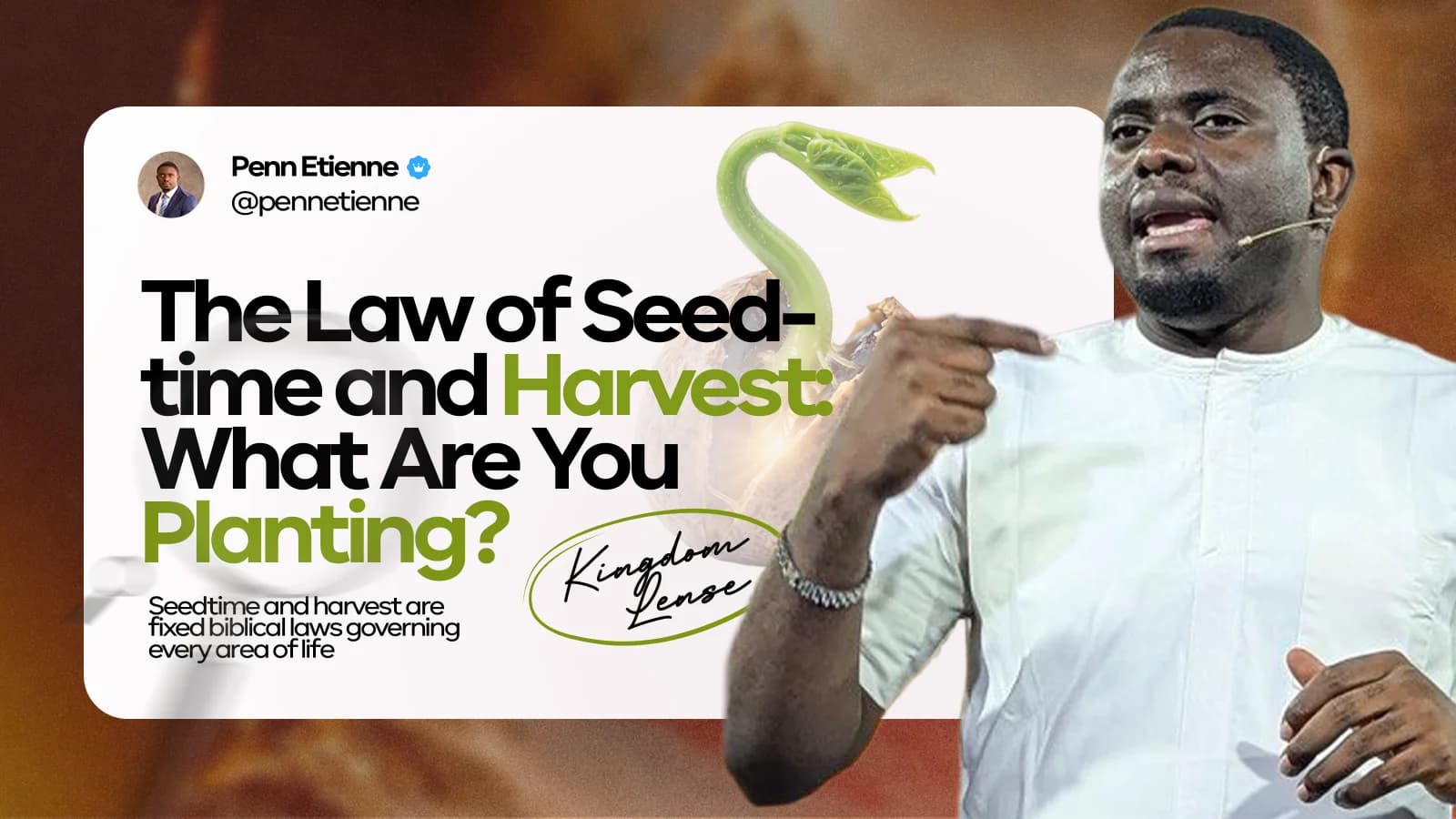
The Law of Seedtime and Harvest: What Are You Planting?
Seedtime and harvest are fixed biblical laws governing every area of life. Discover how your spiritual habits, relationships, and daily resources act as seeds, why patience is critical during planting season, and how the choices you sow today guarantee your harvest tomorrow.
There are immutable principles that govern life, and chief among them is the law of seedtime and harvest. From the beginning, Scripture establishes that the earth operates according to fixed spiritual and natural laws ordained by God.
After the flood, God declared in Genesis 8:22:
“"While the earth remains, seedtime and harvest, cold and heat, winter and summer, and day and night shall not cease."”
— Genesis 8:22 (KJV)
Seedtime and harvest are never accidental occurrences. They are part of the divine order. The certainty of a harvest demands our deliberate attention during the season of planting.
Life Is Seedtime
Every single day is an act of planting. We often focus heavily on what we desire to receive, while neglecting the quality of what we are currently sowing.
- We desire a harvest of peace, but what are we planting?
- We desire growth, but what are we sowing?
- We desire a meaningful future, but what seeds are we placing into the ground today?
The future does not appear by chance; it grows directly out of the seeds planted in the present. As Galatians 6:7 establishes:
“"Do not be deceived: God cannot be mocked. A man reaps what he sows."”
— Galatians 6:7 (KJV)
Harvest is not a possibility—it is a guarantee. Whatever you sow, that is precisely what you will reap.
Recognizing the Different Types of Seed
To plant wisely, you must identify your seeds and categorize them correctly rather than consuming them carelessly.
1. Spiritual Seeds
The investments you make in your walk with God are eternal seeds.
The Word of God: Time spent studying Scripture deposits divine truth into your heart.
Prayer and Fasting: Time in the secret place aligns your spirit with God's will.
Spiritual Discipline: Consistent obedience prepares and positions your life for long-term spiritual authority.
These investments are never wasted; they actively build the foundation for your spiritual future.
2. Relational and Moral Seeds
Our conduct with others carries definite spiritual weight.
Kindness and Compassion:Inconveniencing yourself to encourage, assist, or serve someone is planting a powerful seed into fertile ground.
Words and Attitudes: What you speak over people and the character you display daily establish the relational climate you will inhabit tomorrow.
3. Practical and Personal Seeds
God has given us earthly resources and capacities that must be stewarded intentionally.
Time and Energy: Dedicating your strength to develop valuable skills, build projects, and study thoroughly will produce professional and personal fruit.
Material and Financial Resources: Discerning the difference between resources intended for current sustenance and resources meant to be sown into kingdom work and good ground.
Crucial Principles of the Planting Season
1. Do Not Eat Your Seed
There is a fundamental difference between what is given to sustain you today and what is given to produce a future harvest. When an individual consumes every resource—whether money, time, energy, or opportunity—out of immediate appetite, nothing is left to plant. Discernment in seedtime protects your future harvest.
2. Do Not Confuse Seedtime With Harvest
Impatience is one of the greatest hazards of the planting season. There is an appointed process and waiting period between sowing and reaping. A farmer does not plant in the morning and expect to harvest in the afternoon. If you are currently studying, praying, serving, or developing behind the scenes with no visible results, do not conclude that nothing is happening. You are simply in seedtime.
3. Do Not Compare Your Seedtime With Another's Harvest
Comparison produces discouragement and causes you to despise your own preparation. When you observe someone enjoying fruitfulness, remember that you are viewing their harvest season while standing in your own planting season. Your responsibility is to remain faithful to your own timeline and plant diligently.
4. Sow in Tears, Reap in Joy
Planting is not always comfortable. In Psalm 126:5–6, Scripture states:
“"Those who sow in tears shall reap with songs of joy. He who goes out weeping, carrying seed to sow, will return with songs of joy, carrying sheaves with him."”
— Psalm 126:5–6 (KJV)
Obedience often demands sacrifice. Continuing while tired, remaining faithful when there is no immediate validation, and giving when it costs you are all part of the discipline of sowing. Tears do not mean the seed is lost; the return of the harvest remains certain.
5. Examine the Seed When the Harvest Is Wrong
When the outcomes in your life are not what you desire, examine what has been sown. You cannot continually plant bitterness, slothfulness, or carnal habits and expect a harvest of righteousness, peace, and fruitfulness. If the harvest must change, the seed must change first.
Do Not Miss Your Planting Season
For those who are young and have strength, time, and opportunity ahead of them: do not let the planting season pass unused.
Do not waste your season admiring the harvests of others. Plant intentionally. Learn, pray, study, serve, give, and build.
The harvest will arrive in its appointed season. The decisive question is: Will you have seed in the ground when that day comes?
Comments
Be the first to share your thoughts.